

Please use the sharing tools found via the email icon at the top of articles. Copying articles to share with others is a breach of FT.com T&Cs and Copyright Policy. Email licensing@ft.com to buy additional rights. Subscribers may share up to 10 or 20 articles per month using the gift article service. More information can be found here.
Jay Powell will make his first appearance at the Senate Banking Committee this week. It is a big moment for the new chairman of the US Federal Reserve — his first opportunity to step out of the shadow of Janet Yellen, his predecessor, and define his own views. American politicians can also use this moment to ask some key questions about where the economy is heading and how he intends to shape monetary policy. Rana Foroohar puts forward three issues on which she would like to hear Mr Powell’s views in her latest column. First, is the central bank’s focus on pre-empting inflation wrong, given that wages have barely budged? Second, is the increasing concentration of power in the US economy a problem? And third, if the US economy begins to sink, would the Fed chair choose to support stocks, bonds or the dollar? During Ms Yellen’s tenure at the Federal Reserve, the US economy was blessed with low rates and an easy flow of money. Rana points out these circumstances buoyed the economy and limited the pain for ordinary citizens. But at some point, the central bank will run out of fire power and politicians will have to take over. This could prove Mr Powell’s greatest challenge. Avoiding the worst of all post-Brexit worlds Wolfgang Münchau predicts in his column that the UK will end up in a customs union with the EU. But Brussels will not want Brexit Britain to become entirely detached from the bloc, so it will come with stringent conditions. Mediocre management Gavin Kelly blames bad British bosses for some of the country’s productivity problems. The link between employee happiness and national prosperity is rarely frequently made, he argues, and job satisfaction needs to improve. Three basketcases Nick Clegg says the May government’s strategy of dividing Britain’s post-Brexit needs into “three baskets” would create a more statist economy: the very kind of managed market system that Conservatives once rallied against.







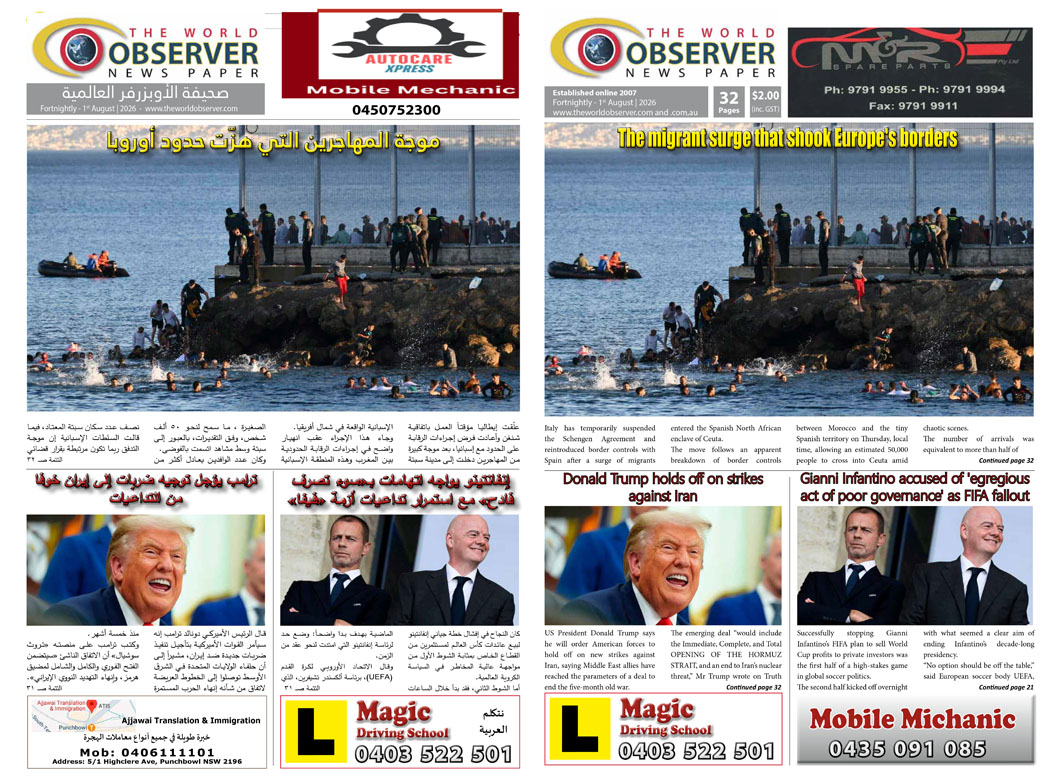
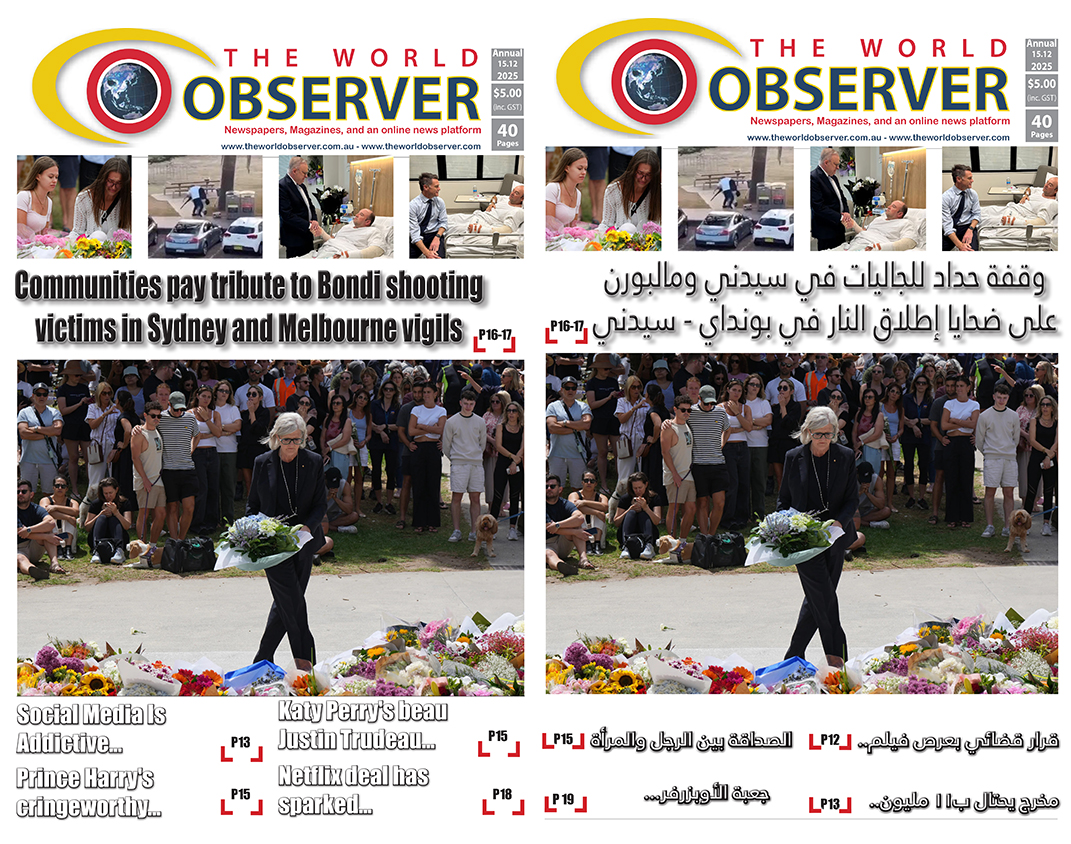
























 The World Observer Media produces a daily online newspaper, a daily Arabic online newspaper and a monthly printed Arabic/English magazine and a weekly printed Arabic/English newspaper.
The World Observer Media’s mission is to entertain and educate all generation from the Ethnic Communities in Australia, who are interested in local, national and foreign information.
The World Observer Media produces a daily online newspaper, a daily Arabic online newspaper and a monthly printed Arabic/English magazine and a weekly printed Arabic/English newspaper.
The World Observer Media’s mission is to entertain and educate all generation from the Ethnic Communities in Australia, who are interested in local, national and foreign information.