
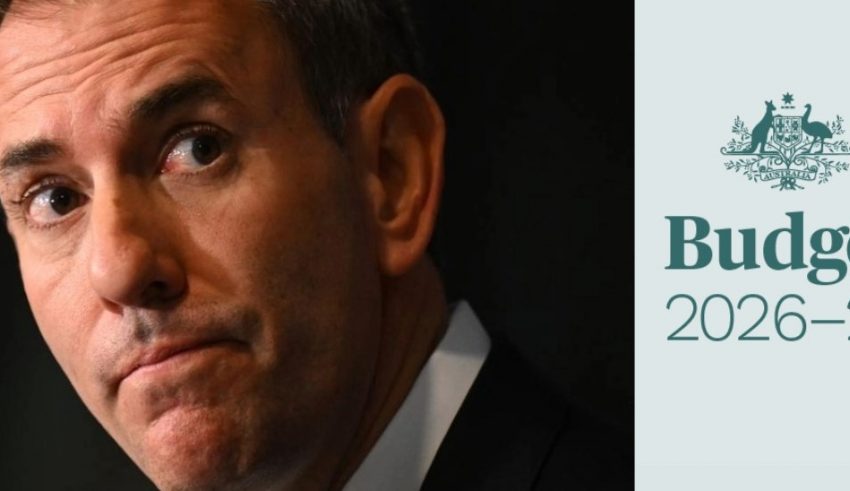

In the first full budget since Labor’s landslide election victory last year, the government is putting some money back in workers’ pockets and increasing taxes on investors.
Treasurer Jim Chalmers is selling it as a big reform budget that will tip the scales to make the tax system fairer for young Australians.
But the war in Iran and the global fuel crisis is having a big impact on the health of the economy, with cost-of-living pain predicted to get worse.
Click the cards below to see this year’s winners and losers.
Winner:
2. The permanent migration program will be maintained at 185,000 places next financial year, with most of that being prioritised for migrants already in Australia.
About 55,000 offshore places will be given to mostly highly skilled migrants, which the government says will reduce pressure on total migration.
And the test for who to accept as a permanent migrant will be reformed to select better educated, higher-skilled and younger migrants overall.
There’s also bad news for backpackers, with more controls coming for the Working Holiday Maker visa program, which lets young travellers stay in Australia longer and undertake short-term work.
A ballot system will be expanded to better manage the program and ensure “fairer allocation” that supports Australia’s national interests.
In terms of overall migration to Australia, net overseas migration will rise by just shy of 1 million people between 2026–27 and 2028–29.
3.
The green Medicare card was never far from Prime Minister Anthony Albanese’s pocket in his re-election pitch to voters last year, but since then the government has been working to restructure the overstretched system.
Health usually gets one of the largest slices of the budget pie, and this year is no different. Health accounts for more than 16 per cent of total expenses in 2026-27.
A record extra $25 billion is going toward public hospitals under a new five-year funding deal clinched with the states.
There’s also an additional $1.8 billion over five years to keep walk-in Urgent Care Clinics up and running long term.
The government will also once again increase the Medicare levy low-income threshold, so about 1 million Australians on lower incomes will continue to be exempt from the levy or pay it at a reduced rate.
4.
Social Services is getting a $1.7 billion boost over two years to improve service delivery.
The money will be funnelled into frontline staff at Centrelink.
Elsewhere in the budget, other public servants haven’t been so lucky.
Finance Minister Katy Gallagher has asked federal departments and agencies to find savings of about 5 per cent per year.
5.
It’s been a great time to be an electric vehicle driver, with the past few months delivering pain at the bowser for everyone running on fuel.
Until now, there’s been generous tax discounts in place to encourage more people to buy EVs.
This budget, the government has wound back those discounts, saving the budget $1.7 billion over four years.
But it hasn’t abandoned the discount entirely, which is a win if you consider that the scheme cost taxpayers 10 times the $90 million it had originally forecast this year alone.
From April 2027, the tax exemption will still apply to electric vehicles costing less than $75,000, but those above that threshold will only get a 25 per cent discount on the fringe benefits tax.
From April 2029, all electric vehicles below the luxury car tax threshold will receive a 25 per cent tax discount.
Climate Change Minister Chris Bowen’s view is that the incentive scheme has already done its job, creating a boom in EV uptake that has driven investment in charging stations and other infrastructure.
The discounts were unlikely to last forever, but the slow walk back of benefits gives people already considering an EV time to make a purchase.
6.
Gas companies have avoided a 25 per cent export tax, despite a sustained social media campaign and a recent Senate inquiry probing the issue.
A group of progressive politicians, influencers and economists have argued the industry makes enormous profits from exporting Australian LNG without paying its fair share to taxpayers.
Earlier this year, a video of independent senator David Pocock went viral when he asked a government official to confirm the Petroleum Resource Rent Tax (PRRT) was expected to raise less revenue than a tax on beer.
That story hasn’t changed this budget, with the beer excise expected to bring in about $2.8 billion, and the PRRT forecast to bring in $1.9 billion.
The PRRT tax take was revised up by $400 million in the government’s forecasts, indicating the gas companies made a significant windfall from the war in Iran and the subsequent energy crisis.
On the other hand, gas companies will face more rules from July 1 next year.
Labor’s domestic gas reservation scheme will force east-coast LNG exporters to sell 20 per cent of their gas to the Australian market.
The government says the reservation will drive down gas prices for households and heavy industry, but for gas companies, it means they will probably get a lower price than if they were selling that gas on the global market.
7.
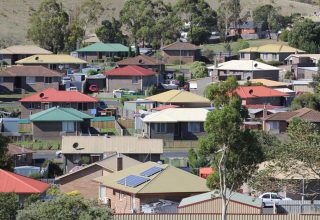
The government projects that changes to the capital gains tax discount and negative gearing will help 75,000 homes change hands from investors to first home buyers.
Those measures are predicted to reduce housing supply by 35,000 homes.
But the budget also includes $2 billion over four years for councils and utility companies to build roads, pipes, power and sewage connections to speed up the construction of new housing.
The money for infrastructure will support 65,000 new homes, which means the net impact of these policies is 30,000 extra homes.
Foreign investors will be banned from buying existing homes for an extended period of two years, until mid-2029. That won’t apply to investment in new homes.
As part of the government’s broader productivity package, there’s also $105.9 million over four years to build an AI tool to help developers navigate environmental red tape, making it easier and quicker for projects to get approved.
Losers:
This year’s budget aims to massively rein in the National Disability Insurance Scheme, which is now costing $50 billion a year — four times more than expected.
To preserve the scheme’s “social licence”, the government wants to reduce its annual growth rate from about 10 per cent down to 5—6 per cent long term.
Cost-saving measures include pushing more than 160,000 participants off the NDIS and onto state-run support programs by 2030.
The budget forecasts spending growth will drop below inflation to about 2 per cent a year over the forward estimates, before returning to 5 per cent over the medium term from 2030.
The changes are projected to save the budget $37.8 billion over the forward estimates, while avoiding a $13 billion projected blow-out over the same period.
Labor will spend $2 billion to establish the Thriving Kids program to support children with autism and other neurodevelopmental conditions.
2.
Labor will introduce a minimum 30 per cent tax on discretionary trusts from July 1, 2028, with some exceptions.
Trusts are used by families to split income and take advantage of the tax-free and lower-tax thresholds on income tax.
Under the new settings, trustees are required to pay the tax, and beneficiaries will need to declare the income in their tax returns.
Small businesses and other taxpayers will be given three years from July 1, 2027, to restructure out of discretionary trusts into companies or fixed trusts.
The minimum tax will not apply to other types of trusts, such as fixed trusts, super funds, deceased estates and charitable trusts.
Other exemptions include primary production income of farms and certain income relating to vulnerable young people.
Labor argues the change will ensure a fairer rate of tax is paid on income from discretionary trusts so it’s more in line with rates paid by workers earning a wage.
The measure is expected to raise $4.5 billion over the next four years, with the extra revenue funding tax cuts for workers.
3.
The government is losing the battle against illegal tobacco, and it’s costing billions in lost revenue.
The tobacco excise is the tax applied to every packet of cigarettes, and has been a lucrative source of income for the government.
But with the boom of illegal tobacco, the government is collecting significantly less revenue.
With even more sales moving to the black market, the government has had to mark down its expected revenue over five years by $8 billion.
That’s $1.2 billion more lost revenue than it thought it would lose in this years’ budget.
4.
The government has scrapped an extra private health insurance subsidy for people aged over 65, estimating that more than 3 million Australians will have to pay, on average, between $226 and $255 more each year as a result.
Before this change, people aged 65—69 could claim 28 per cent of their private insurance premiums, and that jumped to 32 per cent for anyone over 70.
People younger than 65 receive a 24 per cent rebate. This change means that rate will now be applied to all Australians, regardless of their age.
Health Minister Mark Butler has said the savings, which the budget has revealed will be about $3 billion over the forward estimates, or $11 billion over about a decade, will be used to pay for an extra 5,000 aged care beds and at-home aged care supports.
But it’s not all bad news. The budget has allocated almost $450 million over five years to fund a free RSV vaccine for Australians 75 and over and Indigenous Australians over the age of 60.
5.
Investors are losing some of their discounts in a major overhaul of the tax system.
Under the current rules, Australians can take advantage of a 50 per cent capital gains tax discount if they hold an asset for more than 12 months.
A capital gain is the profit made from selling assets, such as investment properties, shares, crypto or even collectible items, such as artwork.
This discount was designed to encourage investment. However, critics argue the measure, combined with negative gearing, has skewed home ownership away from owner-occupiers and towards property investors.
The 50 per cent discount will be replaced by a discount based on inflation.
Investors will always pay at least 30 per cent tax on gains under a new minimum rate designed to avoid people holding on to assets until years when their income is low.
Pensioners and people on income support will be exempt from the 30 per cent minimum rate.
The new reforms will only apply to gains made after July 1, 2027, with any made before that date still qualifying for the 50 per cent discount.
To encourage investment in new housing, investors who purchase new builds can choose from the 50 per cent CGT discount or the new settings when they sell their properties.
The new rules will also partially end an exemption for assets purchased before 1985.
Those Australians sitting on decades-old assets must now pay tax on gains made after July 1, 2027, using the new inflation rules.
Combined with changes to negative gearing, this measure is estimated to raise $3.6 billion over five years from 2025–26, and is expected to help 75,000 Australians buy their own home over the next decade.
These changes won’t impact super funds, including Self Managed Super Funds, which will continue under their current arrangements.
6.
Under Labor’s proposed changes, landlords will no longer be able to take advantage of an investment strategy known as negative gearing on existing properties purchased after today.
There is, however, an exemption for new builds.
Negative gearing allows landlords to reduce their income tax by deducting the financial losses from renting out a property (such as when interest payments and other costs are higher than rental income).
Any investment property owned before budget night will be exempt, allowing owners to continue to negatively gear their properties.
Negative gearing will now be limited to new builds only, to incentivise more housing supply.
However, investors who buy existing homes after budget night will still be able to deduct losses against residential property income.
They will also be able to carry forward losses to future years to deduct against residential property income.
Combined with changes to the capital gains tax, this measure is expected to raise an estimated $3.6 billion over five years from 2025–26, and is expected to help 75,000 Australians buy their own home over the next decade.
The government expects these changes to increase rents by $2 a week.





















 The World Observer Media produces a daily online newspaper, a daily Arabic online newspaper and a monthly printed Arabic/English magazine and a weekly printed Arabic/English newspaper.
The World Observer Media’s mission is to entertain and educate all generation from the Ethnic Communities in Australia, who are interested in local, national and foreign information.
The World Observer Media produces a daily online newspaper, a daily Arabic online newspaper and a monthly printed Arabic/English magazine and a weekly printed Arabic/English newspaper.
The World Observer Media’s mission is to entertain and educate all generation from the Ethnic Communities in Australia, who are interested in local, national and foreign information.