
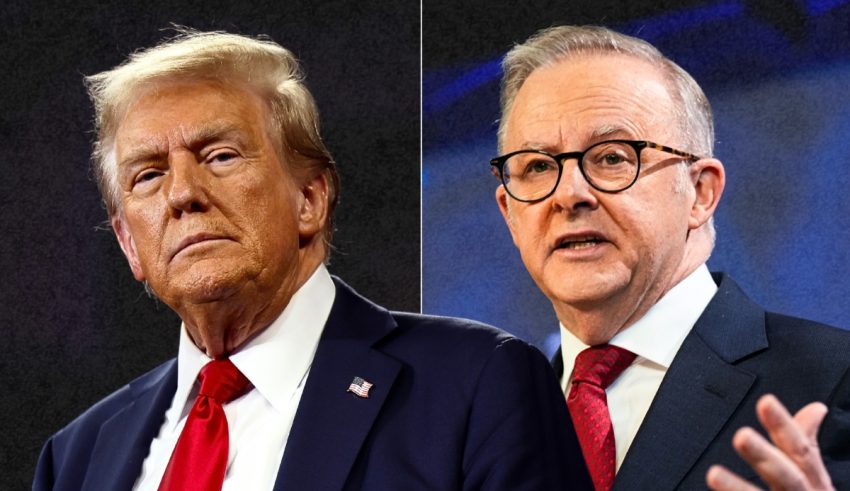

US President Donald Trump has not included Prime Minister Anthony Albanese in his 24-hour itinerary in New York for the UN General Assembly.
Trump’s diary announcement all but confirms the two leaders will not have their first face-to-face meeting while Albanese in the US.
However, Albanese has been invited to a “welcome reception” hosted by Trump for more than 100 world leaders.
The UN General Assembly opened on Tuesday (AEST) with French president Emmanuel Macron joining Australia, Britain and Canada in formally recognising Palestine.
“We can no longer wait,” Macron told world leaders at the UN headquarters in New York.
White House press secretary Karoline Leavitt said Trump “disagrees with this decision” on Palestine.
“He feels this does not do anything to release the hostages, which is the primary goal right now in Gaza, does nothing to end this conflict and bring this war to a close.
“Frankly, he believes it’s a reward to Hamas. So being, he believes these decisions are just more talk and not enough action from some of our friends and allies. I think you will hear him talk about that tomorrow at the UN.”
Albanese is preparing to meet Macron on the sidelines of the gathering as he defends Australia’s stance on Palestinian recognition.
Albanese and Macron will sit down in New York on Tuesday (AEST) for their third official meeting. The conflict in the Middle East is likely to be on the agenda.
The talks will be co-chaired by Macron and Saudi Arabia’s Crown Prince Mohammed bin Salman.
Albanese will use his speech to compare the plight of Palestinians to that of the Jews before the creation of Israel.
“In recognising Palestine, Australia recognises the legitimate and long-held aspirations of the Palestinian people,” he will say.
“It means real hope for a place they can call home.
“This is the same hope that sustained generations of Jewish people.”
In his speech to the two-state solution conference, Albanese will also urge the Israeli government to “accept its share of responsibility” for the “humanitarian catastrophe” in Gaza.
A swathe of countries are using this session of the UN General Assembly to formally recognise Palestine, including Australia, Britain, Canada, France, Portugal, Malta and Andorra.
Roughly 150 of the UN’s member states, or more than three-quarters, now recognise its statehood.
Australia faces pushback from 25 US Republicans, who have suggested “punitive measures” could be imposed on countries that recognise a Palestinian state.
The grouping of hardline Israel supporters, including former presidential candidate Ted Cruz, say the countries choosing to recognise Palestine are “rewarding terrorism”.
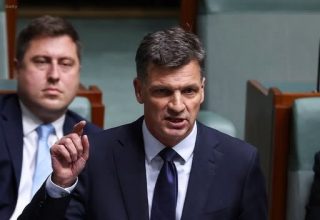
Opposition Leader Sussan Ley has written back to the American politicians, claiming the decision to acknowledge Palestine “does not reflect the view of a majority of Australians”.
Ley pointed to an August Resolve poll showing 44 per cent of voters believed the government should not recognise statehood, 32 per cent thought it should wait until Hamas was removed from power, and 24 per cent backed Labor’s move to recognise statehood.
“I write to reassure you, and the Congress, that this decision taken at this time by the Labor government does not enjoy bipartisan support here in Australia. The federal opposition opposes this decision and would reverse it should we form government,” Ley wrote on Monday.
She has also flagged plans to visit the US in early December.




















 The World Observer Media produces a daily online newspaper, a daily Arabic online newspaper and a monthly printed Arabic/English magazine and a weekly printed Arabic/English newspaper.
The World Observer Media’s mission is to entertain and educate all generation from the Ethnic Communities in Australia, who are interested in local, national and foreign information.
The World Observer Media produces a daily online newspaper, a daily Arabic online newspaper and a monthly printed Arabic/English magazine and a weekly printed Arabic/English newspaper.
The World Observer Media’s mission is to entertain and educate all generation from the Ethnic Communities in Australia, who are interested in local, national and foreign information.