
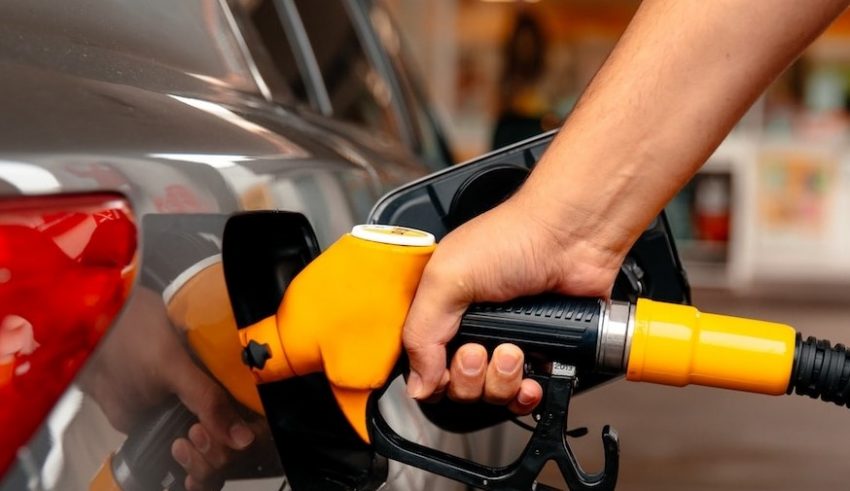

The federal government’s decision to ease Australia’s fuel standards in response to elevated oil prices has sparked intense discussion about what it will mean for consumers at the pump.
The release of so-called “dirty” fuel into the domestic market — along with the government’s drawing-down of strategic reserves — is intended to ease fears of a fuel shortage brought on by the war in the Middle East.
But the decision means some Australians will be filling their tanks with petrol that contains elevated sulphur levels, temporarily reversing a move the Albanese government took in 2024.
So, what will this mean for Australians’ car engines and wallets — and what about the air we breathe?
What has the government actually done?
The Albanese government has made a series of moves in a bid to keep fuel prices from spiking due to the outbreak of war in the Middle East.
Among those moves is a decision to release hundreds of millions of litres of fuel from Australia’s strategic reserves into the market, as well as to work with industry on supply chain bottlenecks.
Chris Bowen announces the release of fuel from Australia’s strategic reserves on Friday.
One decision that has sparked some pushback, though, is Energy Minister Chris Bowen’s temporary amendment of Australia’s fuel quality standards to allow the return of so-called “dirty” fuel to the domestic market.
The eased standards will be in place for 60 days and will allow petrol from Ampol’s Lytton refinery in Brisbane to be sold within Australia instead of being exported overseas to countries with lower fuel standards.
The Lytton refinery is one of just two still operating in Australia, with the other being Viva Energy’s facility in Geelong, which currently produces cleaner fuel and supplies roughly 10 per cent of the petrol and diesel consumed in Australia.
What is ‘dirty’ fuel?
Generally speaking, “dirty” fuel is any fuel that contains contaminants — in other words, the term could apply to any fuel refined from crude oil.
In the Australian context, though, it has typically been used to describe fuel with a high concentration of sulphur.
That’s because up until December 2024, Australia’s fuel standards lagged well behind those of the rest of the world — including the US, UK, EU, Japan and China, where fuel typically must contain sulphur at levels of less than 10 parts per million (ppm).
Australia’s diesel fuel has had a similar requirement in place since 2009, but up until 2024, when the 10ppm standard was adopted, premium 98 and 95 unleaded fuel was able to be sold at 50ppm, and 91 unleaded at 150ppm.
Ampol’s Lytton refinery currently produces fuel for overseas markets with lower fuel quality standards.
While the government is yet to publish a number for its new, temporary fuel standards, the Lytton refinery produces petrol at 50ppm, meaning the standard for petrol must at least return to its pre-2024 levels for premium unleaded.
Sulphur is a natural component in crude oil that is partially removed during the refining process.
Reducing sulphur levels down to 10ppm requires special equipment, with the necessary refinery upgrades costing in the realm of hundreds of millions of dollars.
What will higher sulphur levels do to my car?
If the eased fuel standards remain in place for only a short period, this change shouldn’t do much harm to anyone’s engine.
Keep in mind the levels of sulphur in the petrol being diverted to the domestic market are the same as what they were as recently as 2024, and that petrol will also be mixed in with cleaner blends.
As part of its deal with the government to allow the reintroduction of 50ppm fuel, Ampol has also promised to prioritise areas that are at risk of fuel shortages, as well as regional areas serviced by independent retailers through the spot market.
That means that, for many Australians, this decision won’t affect them at all.
The key thing to remember is that this is not a case of sulphur being added to Australia’s fuel — it’s a case of some fuel with more sulphur in it being redirected to the domestic market.
Where fuel quality could become more of a concern, however, is if the eased restrictions remain in place in the long term, though at present this seems unlikely.
Higher sulphur levels are worse for engines because sulphur oxides, which form during combustion, can combine with water vapour and condensation to form sulphuric acid, which corrodes engine components over the long term.
What about the environment?
The inclusion of more sulphur in Australia’s fuel mix won’t impact greenhouse gas emissions.
However, it will have some effect on air quality where the fuel is burned, a key area of concern for those opposing the change.
Tristan Edis, director of analysis at Green Energy Markets, spoke to Alicia Barry on ABC News’s The Business on Thursday about the risk to human health posed by higher sulphur emissions.
“Essentially, it means more problems with asthma, risk of cardiovascular problems and exacerbated risk of heart attack,”
he said.
More sulphur in the atmosphere can also create smog when it combines with other compounds in the atmosphere.
Why did the government make this decision?
So if higher sulphur content in fuel is worse for both engines and the environment, why has the government permitted it?
It’s all about heading off a large spike in fuel prices — a key driver of inflation, with the potential to cause economic damage that can take years to get under control.
The war in the Middle East has resulted in Iran essentially shutting down shipping in the Strait of Hormuz, a small stretch of water in the Persian Gulf through which about 20 per cent of the world’s oil supply has to travel to leave the region.
Consequently, crude oil prices are pushing $US100 a barrel, and could potentially rise higher.
Leaked Treasury modelling obtained by the ABC shows that the government is predicting that if prices remain at that level for three months, headline inflation would be about 0.5 percentage points higher than it otherwise would be.
If the price of crude averages $US120 a barrel and stays that way for even longer, headline inflation is predicted to jump by a full percentage point — and Australia’s GDP would be expected to take a 0.3 percentage point hit.
While the global oil price is out of the Albanese government’s control, measures like lowered fuel standards can put downward pressure on prices by increasing domestic supply — and, if sold convincingly, can ease fears in the community of a sudden price hike, potentially lowering demand.
How long will this last?
At this stage, the government says the eased fuel standards will be in place for two months — 60 days from March 12, to be exact.
There’s nothing stopping the government from extending that time period, should the need arise, but it’s unlikely this is intended to be a long-term move.
That’s partially because of the reasons mentioned above, with improved fuel standards being a key achievement of the Albanese government’s first term.
There’s also the fact that Viva Energy’s Geelong refinery just underwent a $400 million upgrade, in part to enable it to provide 10ppm fuel to the domestic market — and much of that money came from the government.
Ampol’s Lytton refinery is currently undergoing a similar upgrade.
What’s clear, though, is that predicting the future in this economic environment is a mug’s game (though it is the job of Treasury).
What happens next, in the Middle East or elsewhere, is anyone’s guess.
































 The World Observer Media produces a daily online newspaper, a daily Arabic online newspaper and a monthly printed Arabic/English magazine and a weekly printed Arabic/English newspaper.
The World Observer Media’s mission is to entertain and educate all generation from the Ethnic Communities in Australia, who are interested in local, national and foreign information.
The World Observer Media produces a daily online newspaper, a daily Arabic online newspaper and a monthly printed Arabic/English magazine and a weekly printed Arabic/English newspaper.
The World Observer Media’s mission is to entertain and educate all generation from the Ethnic Communities in Australia, who are interested in local, national and foreign information.